Answers › Islamic geometry
What is zellige?
Zellige (also written zillij) is Moroccan cut-tile mosaic: glazed clay tiles are chipped by hand into small shapes and set together in geometric patterns. The pieces are laid glazed side down in the pattern and backed with concrete, so each panel is made face down.
What the sources say
- Tiles are moulded from a fine clay and glazed; some pigments are made locally, others are imported.[1]
- Each piece is cut by striking the tile with a chisel-headed hammer against a steel anvil, then its back is bevelled.[1]
- The pieces are placed glazed side down in the pattern, and a concrete backing about seven centimetres thick is poured over them.[1]
- Historic zellige can be seen, for example, in the courtyard of the al-'Attarin madrasa in Fez.[2]
More questions
How is zellige different from ordinary tiles?
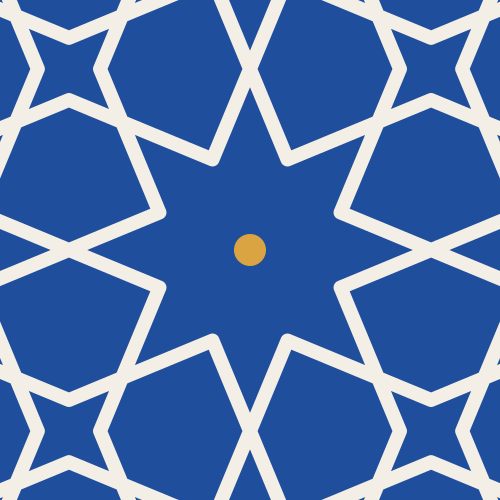
Ordinary tiles are whole squares or rectangles laid side by side. In zellige, every shape of the pattern is a separate small piece cut by hand from a glazed tile, so the pattern is built piece by piece.
Make it yourself
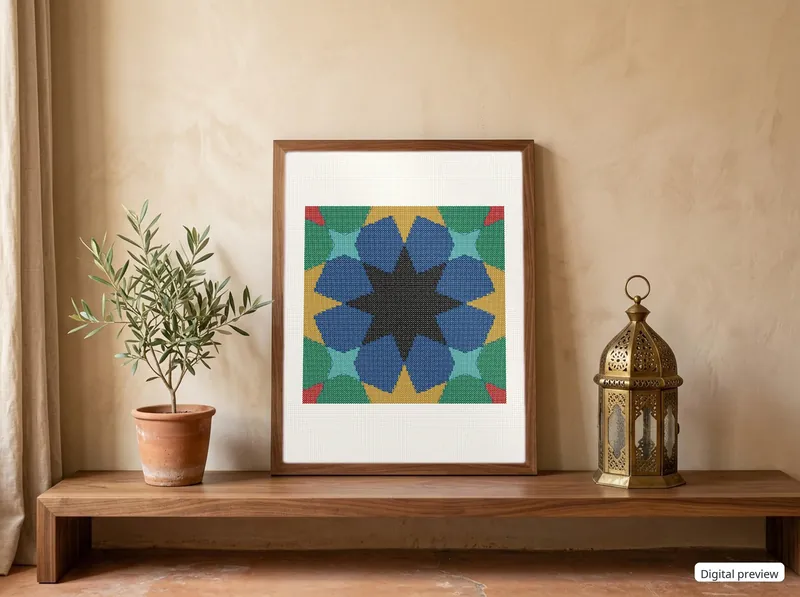
- Design your zellige star: free, with a cross-stitch chart
- Islamic tessellations: how the tilings work
- Pattern reference: named patterns with sources
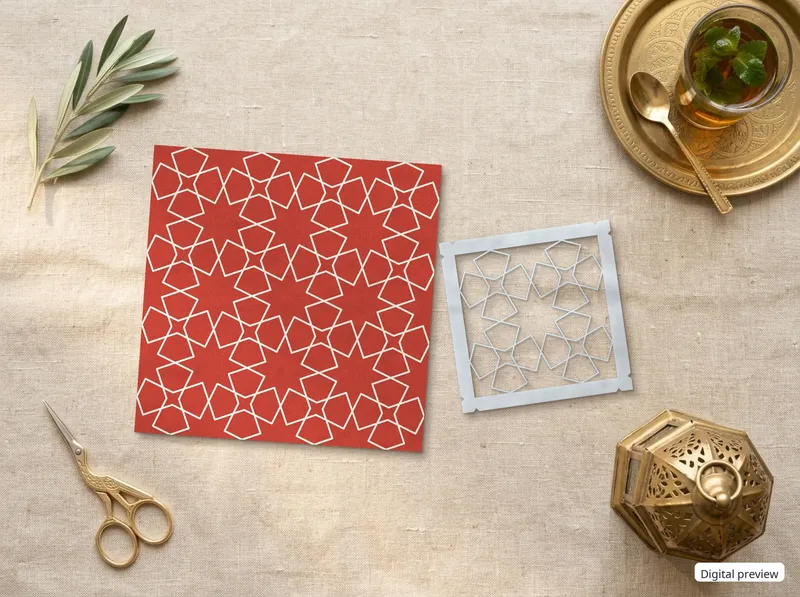
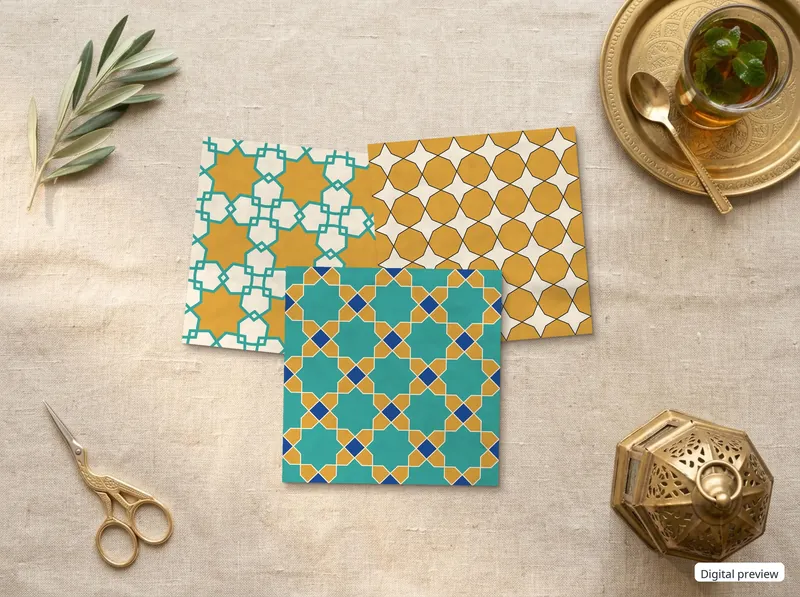
Our patterns are digital downloads sold on Etsy; their pictures are digital previews drawn from the exact files.
Sources
- Louis Werner, "Zillij in Fez", Saudi Aramco World 52:3: archive.aramcoworld.com
- Archnet, Madrasa al-'Attarin, Fez: archnet.org/sites/1723
How this page is made: every figure and number is computed by our code and checked; facts about places and history come only from the sources cited. Corrections are welcome: hello@patternsouk.shop.
The matching patterns
Printable digital downloads, sold on Etsy. The pictures are digital previews.